Introduction
Caramelized shallot pasta offers a delightful twist on traditional pasta dishes, merging the sweetness of slowly cooked shallots with al dente noodles. This dish exemplifies the art of coaxing flavors through gentle cooking, making it both comforting and elegant.
The shallots, when caramelized, transform into golden-brown morsels that add depth and complexity to your plate. Combined with a few other simple ingredients, this recipe highlights how a few carefully selected components can create a memorable meal from scratch.
Perfect for a weeknight dinner or a special occasion, caramelized shallot pasta is not only delicious but also surprisingly satisfying to prepare. It invites home cooks to explore their culinary creativity while enjoying the process of cooking.
Ingredients
- 8 ounces spaghetti or fettuccine
The pasta forms the base of the dish, providing a chewy texture that complements the sweetness of the shallots. Choosing between spaghetti and fettuccine depends on personal preference, though both varieties work well with the sauce. - 3 tablespoons olive oil
Olive oil is crucial for sautéing shallots and adds a rich, fruity flavor. The oil helps to achieve that perfect caramelization, allowing the shallots to release their natural sugars and achieve a beautiful golden hue. - 4 large shallots, thinly sliced
Shallots bring a unique sweetness and a mild onion flavor that enhances the dish. Their naturally sweet profile and subtle complexity are what make the caramelization process so rewarding. - 2 cloves garlic, minced
Garlic adds a fragrant, savory note to the dish, balancing the sweetness of the shallots. Its flavor infuses the oil, creating a more robust base for the sauce. - 1/2 cup vegetable broth
Vegetable broth serves as the liquid component that helps deglaze the pan, lifting off any flavorful bits from caramelizing the shallots. It adds depth while keeping the dish light and plant-based. - 1/4 cup grated Parmesan cheese
Parmesan cheese introduces a salty, umami kick that enhances the overall flavor. Adding it to the pasta brings creaminess and a subtle richness that ties the ingredients together. - Salt and pepper to taste
Seasoning with salt and pepper is essential for bringing out the flavors of the ingredients. These basic seasonings help balance the sweetness of the shallots and the richness of the cheese. - Fresh parsley, chopped (for garnish)
Garnishing with parsley adds a burst of color and freshness to the dish. It serves not only as a visual appeal but also enhances the dish with a herby brightness.
Directions & Preparation
Step 1: Cook the pasta according to package instructions.
Bringing a large pot of salted water to a boil, then adding the pasta is essential for achieving the right texture. Cook until ‘al dente’ for a firm bite, which will hold up to the sauce without becoming mushy. Reserve a cup of pasta water before draining to adjust the sauce consistency later.
Step 2: Heat olive oil in a large pan over medium heat.
Warming the olive oil before adding the shallots ensures that they begin to cook right away. Medium heat prevents burning while encouraging the slow release of sugars, which is critical for perfect caramelization. Monitor the heat closely to achieve that golden color without scorching.
Step 3: Add the sliced shallots, cooking until caramelized.
This step is the heart of the dish. As shallots begin to soften, they will turn golden brown and develop a sweet flavor that is the essence of this pasta. Stir occasionally to ensure even cooking, and adjust the heat if they are cooking too quickly. This process typically takes about 15-20 minutes.
Step 4: Stir in minced garlic and cook for another minute.
Adding garlic at this stage allows it to soften while infusing the oil with its aromatic flavor. Cooking it just until fragrant prevents bitterness and complements the sweetness of the shallots perfectly. This harmony of flavors is what elevates the dish.
Step 5: Deglaze the pan with vegetable broth.
This step lifts the flavorful bits stuck to the bottom of the pan, enriching the sauce. Pouring in the vegetable broth and scraping the bottom with a wooden spoon allows those caramelized bits to integrate into the sauce, enhancing every bite. Let it simmer for a few minutes until slightly reduced.
Step 6: Add cooked pasta and Parmesan cheese to the pan.
Tossing the cooked pasta directly in the pan ensures it’s well-coated with the delicious sauce. The heat from the pasta helps to melt the Parmesan, creating a creamy consistency. If the sauce appears too thick, use reserved pasta water to loosen it until desired consistency is achieved.
Step 7: Season with salt and pepper, adjusting to taste.
Seasoning at this point allows for final adjustments. Taste the pasta and add salt and pepper to enhance the flavors. A well-seasoned dish will balance the naturally sweet shallots and the richness of the cheese.
Step 8: Serve garnished with fresh parsley.
Finishing the dish with fresh parsley adds a vibrant touch, both visually and in taste. Plating it beautifully and serving immediately ensures the pasta retains its warmth and textures, making each bite a delightful experience.

The Role of Shallots in Flavor Development
Shallots are crucial in transforming the flavor profile of this pasta dish. Their naturally sweet taste deepens as they caramelize, providing a foundation of richness that standard onions cannot match. This subtler onion flavor allows for other ingredients to shine, making each mouthful a well-balanced experience that is not overwhelming.
Balancing Richness with Freshness
In caramelized shallot pasta, balancing the sweetness of the shallots and the umami notes of Parmesan with a hint of fresh herbs is essential. While the dish is rich and satisfying, the addition of freshly chopped parsley adds brightness, ensuring that every forkful feels fresh and vibrant. This combination keeps the dish from feeling heavy and enhances its overall allure.
Adjusting the Sauce for Perfect Consistency
Finding the right consistency for your sauce is key to a successful pasta dish. Using the starchy reserved pasta water can help achieve the perfect balance of creaminess and liquidity. This flexibility allows you to modify the texture based on personal preference, adapting the dish to suit your needs, whether you prefer it silky or a little more substantial.
FAQs
What if my sauce is too thick?
If your sauce turns out thicker than desired, simply add a little reserved pasta water while tossing the dish in the pan. This water is starchy and will help to loosen the sauce without diluting the flavor.
Can I use other types of pasta?
Yes, you can substitute any pasta shape you prefer, such as penne or farfalle. Just be aware that different shapes may hold sauce differently, which could slightly alter the eating experience.
Why might the shallots taste too bitter?
Bitterness can arise from cooking shallots on too high heat or not monitoring them closely enough while caramelizing. Lowering the heat and cooking slowly allows the sugars to develop without burning.
How do I ensure my garlic doesn’t burn?
Adding minced garlic towards the end of the shallot caramelization process prevents it from burning. Since garlic cooks quickly, keep a close watch once added, stirring just until fragrant.
What can I do if my flavor is too bland?
If you find your dish lacking flavor, consider adding a pinch more salt or a bit of acid like lemon juice or vinegar. This can brighten and enhance the flavor profile significantly.
Can I replace Parmesan cheese with something else?
Absolutely! Nutritional yeast can be a great dairy-free alternative that adds a cheesy flavor. Alternatively, using Pecorino Romano will give a sharper taste.
How do I add more texture to the dish?
For added texture, consider mixing in toasted nuts, like pine nuts or walnuts, or incorporating sautéed vegetables such as spinach or asparagus for a delightful crunch.
What if I don’t have vegetable broth on hand?
If vegetable broth is unavailable, water can be used instead, though it will be less flavorful. Enhance it with a splash of soy sauce or a dash of your favorite seasoning for added depth.
Conclusion
Caramelized shallot pasta is a simple yet elegant dish that celebrates the power of gradually developed flavors. Each ingredient plays a vital role in creating a balanced and satisfying meal that highlights the beauty of homemade cooking.
As you experiment with this recipe, feel free to make adjustments based on your tastes and preferences. The technique of caramelizing shallots opens up endless possibilities, allowing you to craft a pasta dish that is uniquely yours.
Recipe Card
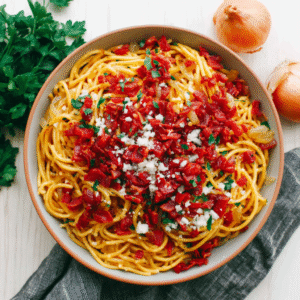
Exploring Caramelized Shallot Pasta at Home
Ingredients
- 8 ounces spaghetti or fettuccine
- 3 tablespoons olive oil
- 4 large shallots thinly sliced
- 2 cloves garlic minced
- 1/2 cup vegetable broth
- 1/4 cup grated Parmesan cheese
- Salt and pepper to taste
- Fresh parsley chopped (for garnish)
Instructions
- Cook the pasta according to package instructions.
- Heat olive oil in a large pan over medium heat.
- Add the sliced shallots, cooking until caramelized.
- Stir in minced garlic and cook for another minute.
- Deglaze the pan with vegetable broth.
- Add cooked pasta and Parmesan cheese to the pan.
- Season with salt and pepper, adjusting to taste.
- Serve garnished with fresh parsley.
Notes
Additional serving suggestions: pair with a crisp salad, garlic bread, or roasted seasonal vegetables for balance.
For make-ahead, prep components separately and assemble just before heating to preserve texture.
Taste and adjust with acid (lemon/vinegar) and salt right at the end to wake up flavors.