Introduction
As the days grow shorter and the temperatures drop, there’s nothing quite like a comforting dish that warms both body and soul. Butternut squash and sage pasta emerges as a perfect choice for those cozy autumn nights, combining the earthy sweetness of butternut squash with the aromatic notes of fresh sage.
This pasta dish is not just about flavor; it's also about creating a delightful experience in your kitchen. The vibrant colors of the squash and the simplicity of the ingredients make this meal a joy to prepare, inviting the essence of fall into your home.
Ingredients
- 12 ounces of pasta (fettuccine or orecchiette)
Pasta serves as the foundation of this dish, providing a hearty base that complements the richness of the squash and sage. Options like fettuccine or orecchiette allow the sauce to cling well, enhancing each bite. - 1 medium butternut squash, peeled and cubed
The star ingredient, butternut squash, adds natural sweetness and a creamy texture when roasted and pureed. Its flavor pairs beautifully with sage, creating a comforting autumnal profile. - 3 tablespoons olive oil
Olive oil not only helps in roasting the squash to perfection but also adds a layer of richness to the dish. Its fruity notes enhance the overall flavor of the pasta. - 1 small onion, finely chopped
Onion brings a mild sweetness and aromatic base to the dish. When sautéed, it deepens in flavor, creating a fragrant backdrop for the butternut squash. - 2 cloves garlic, minced
Garlic adds depth and a pungent kick to the dish. Its bold flavor complements the sweetness of the squash and the herbal notes of the sage. - 1 tablespoon fresh sage, chopped (or 1 teaspoon dried sage)
Sage introduces earthy, slightly peppery notes that pair perfectly with butternut squash. Using fresh sage enhances the dish's fragrance and taste, evoking the essence of fall. - 1/2 cup vegetable broth
Vegetable broth contributes moisture and layers of flavor, helping to create a sumptuous sauce that clings beautifully to the pasta and squash. - 1/4 cup heavy cream or coconut cream (optional)
Adding cream provides a luxurious texture that rounds out the dish. It makes the sauce richer, balancing the sweetness of the squash while making it indulgent. - Salt and pepper, to taste
Seasoning is essential to elevate the flavors of the dish. Salt brings out the natural sweetness of the squash, while pepper adds a hint of spice, making every bite delightful. - Grated Parmesan cheese, for serving (optional)
Parmesan adds a salty, nutty finish to the dish, enhancing the overall flavor. It's a classic complement to pasta and enriches the creamy sauce if used.
Directions & Preparation
Step 1: Preheat your oven to 400°F (200°C).
Preheating the oven ensures that the butternut squash roasts evenly and develops a caramelized exterior, which enhances its sweetness. A hot oven helps achieve that desirable texture and depth of flavor.
Step 2: Prepare the butternut squash by peeling, seeding, and chopping it into 1-inch cubes. Toss with 2 tablespoons of olive oil, salt, and pepper.
Cutting the squash into uniform cubes ensures even roasting. Tossing with olive oil and seasoning before roasting helps in flavor development and creates a beautiful, golden exterior during cooking.
Step 3: Spread the squash on a baking sheet and roast for 25-30 minutes or until tender and caramelized.
Roasting the squash allows its natural sugars to caramelize, intensifying flavor and providing a satisfying texture. Check for tenderness by piercing with a fork; the squash should be soft and golden.
Step 4: While the squash is roasting, cook the pasta according to package instructions until al dente. Reserve 1/2 cup of pasta cooking water before draining.
Cooking the pasta al dente ensures it has the right bite when mixed with the sauce. Reserving pasta water is key; this starchy liquid can be added later to adjust the sauce's consistency and help it cling to the pasta.
Step 5: In a large skillet, heat the remaining tablespoon of olive oil over medium heat. Sauté the onion until translucent, about 5 minutes.
Sautéing the onion brings out its natural sweetness and adds depth to the dish. Cooking until translucent indicates that the onion is ready to provide a flavorful base for additional ingredients.
Step 6: Add the minced garlic and chopped sage to the skillet, cooking for an additional minute until fragrant.
Garlic and sage release essential oils when sautéed, creating an aromatic base that entices the senses. Cooking briefly infuses the dish with their robust flavors, crucial for elevating the overall profile.
Step 7: Add the roasted butternut squash to the skillet, then pour in the vegetable broth and bring to a gentle simmer.
Combining the roasted squash with the sautéed aromatics allows the flavors to mingle. The vegetable broth adds moisture, forming the base of your sauce. A gentle simmer will help marry all the flavors together.
Step 8: Use a fork or potato masher to mash a portion of the squash into the sauce, leaving some chunks for texture.
Mashing part of the squash creates a creamy sauce without the need for excessive cream. It also maintains some texture, providing a delightful contrast between the smooth sauce and the chunky squash.
Step 9: Stir in the heavy cream (if using) and adjust seasoning with salt and pepper. Let simmer for a few more minutes.
Adding cream enriches the sauce, making it velvety. Simmering allows the flavors to meld together, enhancing the overall taste. Adjusting seasoning at this stage ensures balanced flavors in the final dish.
Step 10: Combine the cooked pasta with the sauce, adding reserved pasta water as needed for desired consistency.
Mixing the pasta with the sauce helps infuse the noodles with flavor. The reserved pasta water is a critical step; it helps achieve the desired creamy consistency without making the dish too thick or soupy.
Step 11: Serve immediately, topped with grated Parmesan cheese if desired.
Serving immediately preserves the luscious texture and warmth of the dish. Topping with Parmesan adds a salty, umami layer, enriching your autumn meal and providing an elegant finish.

The Sweetness of Autumn in Every Bite
Butternut squash embodies the essence of fall, offering a natural sweetness that resonates in each bite of this pasta dish. Roasting brings out these unique flavors, creating a beautiful contrast to the savory elements of onion and garlic. When combined with al dente pasta, the richness of the squash transforms a simple meal into an unforgettable experience that reflects the warmth of autumn.
Sage: The Herb of the Season
Sage stands out as a quintessential herb for autumn cooking. Its earthy, slightly peppery taste complements the sweetness of butternut squash, creating a harmonious balance. In this dish, freshly chopped sage enhances the flavors, evoking memories of hearty fall meals and adding an aromatic depth that tantalizes the palate.
A Comforting Dish for Gathering
Fall is the season of gathering around the table, and this butternut squash and sage pasta makes for a perfect centerpiece at any autumn gathering. Not only does it have crowd-pleasing flavors, but it also offers visual appeal with its vibrant colors. Sharing this dish with loved ones on a cozy night brings warmth, comfort, and the joy of togetherness, a true celebration of the season.
FAQs
What if my butternut squash turns out too caramelized?
If your squash is overly caramelized, it might have a stronger burnt flavor. To balance this, consider adding a bit more vegetable broth when you mix it into the sauce, as it will help to mellow out the intensity.
How can I adjust the consistency of my sauce if it’s too thick?
If your sauce becomes too thick, gradually add more reserved pasta water to loosen it. This starchy liquid not only helps thin the sauce but also maintains a creamy texture that clings to the pasta.
Can I use different pasta shapes for this recipe?
Absolutely! While fettuccine or orecchiette are great options, you can use any pasta shape you prefer. Just remember to adjust the cooking time according to the package instructions for the type of pasta you choose.
What can I do if the flavors are not bold enough?
If you find the flavors lacking, try adding a pinch more salt and freshly cracked black pepper. You can also incorporate a splash of balsamic vinegar for an extra layer of flavor that brightens the dish.
Is it possible to make this dish vegetarian?
Yes, this dish is already vegetarian! Just ensure any optional ingredients, like cheese, are vegetarian-friendly. The vegetable broth used is a great base that enhances the flavors without meat.
What should I serve alongside this pasta for a complete meal?
Consider pairing this dish with a simple arugula salad dressed with lemon vinaigrette or roasted Brussels sprouts. Both add freshness and a complementary crunch to balance the creamy pasta.
Conclusion
Butternut squash and sage pasta perfectly captures the warmth and flavors of autumn. This dish isn't just a meal; it's an invitation to celebrate the comforting moments of the season around the table.
With each forkful, you'll experience the delightful harmony of sweet and savory, making it a standout dish for any autumn gathering. Embrace this recipe as a staple for intimate dinners or cozy nights in—it's sure to become a beloved favorite.
Recipe Card
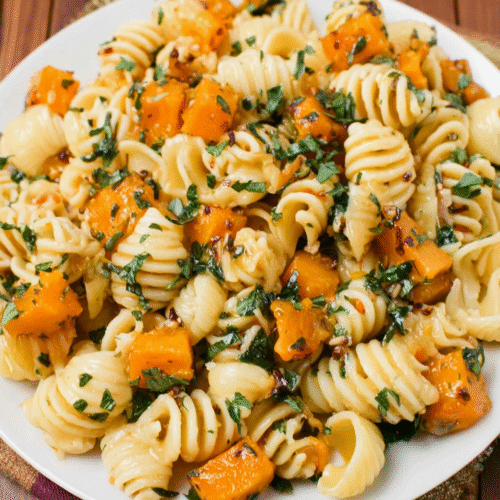
Butternut Squash and Sage Pasta for Autumn Evenings
Ingredients
- 12 ounces of pasta fettuccine or orecchiette
- 1 medium butternut squash peeled and cubed
- 3 tablespoons olive oil
- 1 small onion finely chopped
- 2 cloves garlic minced
- 1 tablespoon fresh sage chopped (or 1 teaspoon dried sage)
- 1/2 cup vegetable broth
- 1/4 cup heavy cream or coconut cream optional
- Salt and pepper to taste
- Grated Parmesan cheese for serving (optional)
Instructions
- Preheat your oven to 400°F (200°C).
- Prepare the butternut squash by peeling, seeding, and chopping it into 1-inch cubes. Toss with 2 tablespoons of olive oil, salt, and pepper.
- Spread the squash on a baking sheet and roast for 25-30 minutes or until tender and caramelized.
- While the squash is roasting, cook the pasta according to package instructions until al dente. Reserve 1/2 cup of pasta cooking water before draining.
- In a large skillet, heat the remaining tablespoon of olive oil over medium heat. Sauté the onion until translucent, about 5 minutes.
- Add the minced garlic and chopped sage to the skillet, cooking for an additional minute until fragrant.
- Add the roasted butternut squash to the skillet, then pour in the vegetable broth and bring to a gentle simmer.
- Use a fork or potato masher to mash a portion of the squash into the sauce, leaving some chunks for texture.
- Stir in the heavy cream (if using) and adjust seasoning with salt and pepper. Let simmer for a few more minutes.
- Combine the cooked pasta with the sauce, adding reserved pasta water as needed for desired consistency.
- Serve immediately, topped with grated Parmesan cheese if desired.
Notes
Additional serving suggestions: pair with a crisp salad, garlic bread, or roasted seasonal vegetables for balance.
For make-ahead, prep components separately and assemble just before heating to preserve texture.
Taste and adjust with acid (lemon/vinegar) and salt right at the end to wake up flavors.