Introduction
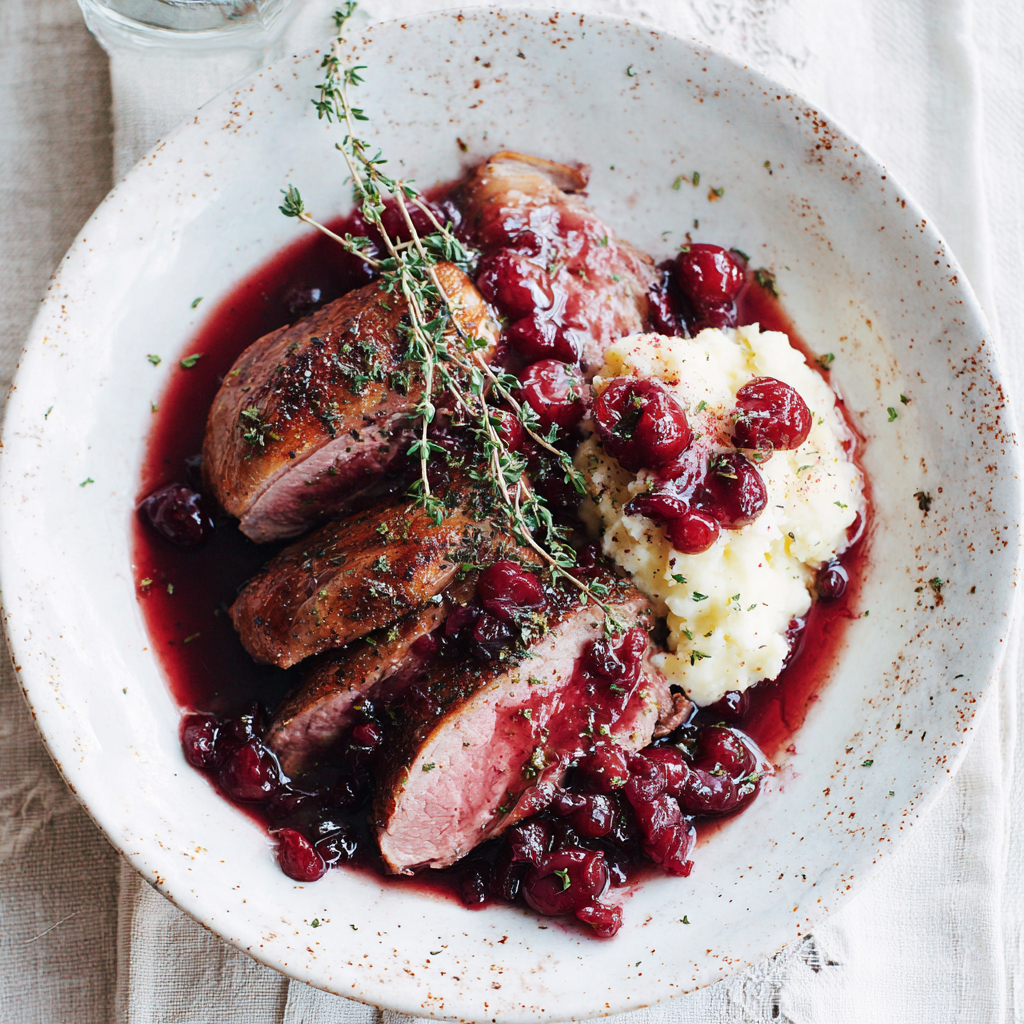
Duck, celebrated for its rich flavor and tender meat, makes for an impressive dish that elevates any home-cooked meal. Coupled with a cherry-port sauce, it transforms an already delightful protein into a luxurious dining experience. This pairing brings out the best in both the duck and the fruit, creating a tantalizing contrast of savory and sweet.
Preparing duck may seem daunting, but with the right techniques, it becomes an accessible and rewarding endeavor. The cherry-port sauce adds depth, drawing in flavors that enhance the meal while being easy to whip up alongside the duck. Let's dive into the steps that'll make your next dinner party memorable.
Ingredients
- 4 duck breasts
Duck breasts are the star of the dish, offering rich meat with a layer of fat that helps keep the meat moist during cooking. Their robust flavor serves as a perfect canvas for bold sauces. - 1 cup fresh or frozen cherries, pitted
Cherries provide a sweet and tart element that balances the richness of the duck. Their flavor infuses the sauce with depth, creating an inviting aroma and taste profile. - 1/2 cup port wine
Port wine adds a complex sweetness and acidity, enriching the sauce while complementing both the cherries and the duck. Its deep flavor enhances the overall dish. - 1 tablespoon balsamic vinegar
Balsamic vinegar brings acidity that brightens the sauce, preventing it from becoming overly sweet. This balancing note is essential for a harmonious flavor. - 1 tablespoon honey
Honey provides additional sweetness while lending a velvety texture to the sauce. It caramelizes slightly during cooking, deepening the overall flavor. - 2 tablespoons olive oil
Olive oil is essential for searing the duck, helping to render the fat and crisp the skin. This foundational fat adds its own subtle flavor to the dish. - Salt and pepper to taste
Salt enhances the natural flavors of the duck and the sauce, while pepper adds a touch of warmth. Proper seasoning is crucial for a well-rounded dish.
Directions & Preparation
Step 1: Preheat the oven to 400°F (200°C).
Preheating the oven is crucial for achieving a well-cooked duck. A hot oven allows the skin to crisp up beautifully while ensuring the meat remains juicy and flavorful. Aim to have everything else ready before this step so you can seamlessly transition to roasting.
Step 2: Score the skin of the duck breasts in a crisscross pattern.
Scoring the skin allows the fat to render out efficiently during cooking, ensuring a crispy exterior. This technique prevents the skin from curling and helps absorb the flavors of the sauce. Be careful not to cut into the meat, which could lead to dryness.
Step 3: Season the duck breasts generously with salt and pepper.
Seasoning at this stage not only enhances the natural flavors of the duck but also prepares it for a perfect crust. Salt draws moisture to the surface, allowing for better flavor penetration and a balanced taste.
Step 4: Heat olive oil in a large, oven-safe skillet over medium heat.
Heating the pan properly is key to a great sear. A hot skillet ensures the skin crisps well without sticking. If the oil shimmers, it's ready for the duck. Use an oven-safe skillet to transition directly to the oven.
Step 5: Place the duck breasts skin-side down in the skillet.
Starting with skin-side down allows the fat to render out gradually, creating a crispy texture. Sear for approximately 6-8 minutes or until the skin is golden brown. This initial phase is essential for getting that coveted crispy finish.
Step 6: Flip the duck breasts and transfer the skillet to the preheated oven.
Flipping the duck allows the meat to sear and the skin to stay crispy while finishing the cooking process in the oven. This method helps ensure that the duck cooks evenly and retains its juiciness. Bake for 8-10 minutes for medium-rare doneness.
Step 7: Remove the duck breasts from the oven and let them rest.
Resting the duck allows the juices to redistribute, which results in tender meat when sliced. This step is essential for maximizing flavor and ensuring each bite remains moist. Tent the breasts loosely with foil during resting.
Step 8: While the duck rests, prepare the cherry-port sauce.
Timing the sauce with the duck resting ensures everything is hot and fresh for serving. Combining the cherry and port creates a sauce with a rich depth of flavor that will beautifully drape over the duck.
Step 9: In the same skillet used for duck, add cherries and port wine.
Using the same skillet captures those delicious browned bits left from the duck, infusing the sauce with flavor. Bring this mixture to a simmer, which helps meld the flavors while evaporating some alcohol from the port.
Step 10: Stir in balsamic vinegar and honey, and simmer until thickened.
Adding balsamic vinegar and honey not only sweetens the sauce but adds a layer of complexity. Simmering allows the flavors to interlace and the sauce to reduce to a nice coat, enhancing its richness and texture.
Step 11: Slice the duck breasts and serve with the cherry-port sauce.
Slicing the duck against the grain ensures tenderness. Plating with the sauce adds visual appeal and enhances the eating experience. Remember to drizzle some extra sauce over the top to showcase the beautiful flavors you've created.

The Art of Cooking Duck Breast
Cooking duck breast can be intimidating, but understanding the technique makes it easier. Start by ensuring your duck has been properly thawed if frozen. Searing is not just for flavor; it’s about rendering the fat. The duck should be at room temperature before cooking to ensure even doneness throughout. Keep a close watch on your skillet to avoid flare-ups caused by excess fat.
Creating Depth with Cherry-Port Sauce
The cherry-port sauce is an integral part of this dish, as it brings sweetness and complexity. Fresh or frozen cherries both work wonderfully, but their freshness will shine through when in season. Don’t hesitate to adjust the balance of sweetness and acidity to your liking. Tasting as you go will help you find that perfect spot where the sauce complements the duck.
Tips for Perfectly Crisp Skin
Achieving crisp skin on duck can make all the difference. Remember to keep the skin side down when searing to ensure proper fat rendering. Avoid overcrowding the skillet, as this can trap steam and prevent the skin from crisping. Also, letting the duck rest post-cooking is vital; it results in crispy skin and juicy flesh that makes each bite delectable.
FAQs
What if my sauce turns out too thick?
If your sauce is too thick, simply whisk in a small amount of water or additional port wine until you reach your desired consistency. A little liquid goes a long way.
How can I adjust the flavors of the sauce if it tastes bland?
If the sauce is bland, consider adding a pinch of salt, a splash more of balsamic vinegar for acidity, or a touch more honey for sweetness, tasting as you go until balanced.
What can I substitute if I don't have port wine?
If you don't have port wine, consider using a fruity red wine with a splash of brandy or a mixture of grape juice and a dash of vinegar for a similar flavor profile.
Can I use frozen cherries for this recipe?
Absolutely, frozen cherries work well and can even be more convenient. Just ensure they’re thawed and pitted before use.
How do I know when the duck is cooked to medium-rare?
For medium-rare duck, the internal temperature should reach 135°F (57°C), which can be checked with a meat thermometer placed in the thickest part of the breast.
Could I enhance the sauce with other fruits?
Yes! Adding fruits like blueberries or raspberries can provide a unique twist on the sauce, offering fresh nuances while maintaining the primary flavor profile.
What should I do if my duck skin isn’t crispy enough?
If the skin isn't crispy, ensure the skillet was hot enough at the beginning and consider giving it a longer sear. A quick broil can also help crisp up the skin at the end.
How do I serve this dish during a dinner party?
Slice the duck breast neatly and fan it on the plate, drizzling the cherry-port sauce over the top. A side of seasonal vegetables or a light salad enhances the presentation.
Conclusion
Duck with cherry-port sauce is truly a dish that celebrates bold flavors and cooking techniques. This combination not only captures the essence of gourmet dining at home but also allows you to showcase your culinary skills with finesse.
With its rich taste and beautiful presentation, this dish is perfect for special occasions or simply to treat yourself and loved ones. Embrace the process and enjoy each step as you create an unforgettable meal.
Recipe Card
Savoring the Richness of Duck with Cherry-Port Sauce
Ingredients
- 4 duck breasts
- 1 cup fresh or frozen cherries pitted
- 1/2 cup port wine
- 1 tablespoon balsamic vinegar
- 1 tablespoon honey
- 2 tablespoons olive oil
- Salt and pepper to taste
Instructions
- Preheat the oven to 400°F (200°C).
- Score the skin of the duck breasts in a crisscross pattern.
- Season the duck breasts generously with salt and pepper.
- Heat olive oil in a large, oven-safe skillet over medium heat.
- Place the duck breasts skin-side down in the skillet.
- Flip the duck breasts and transfer the skillet to the preheated oven.
- Remove the duck breasts from the oven and let them rest.
- While the duck rests, prepare the cherry-port sauce.
- In the same skillet used for duck, add cherries and port wine.
- Stir in balsamic vinegar and honey, and simmer until thickened.
- Slice the duck breasts and serve with the cherry-port sauce.
Notes
Additional serving suggestions: pair with a crisp salad, garlic bread, or roasted seasonal vegetables for balance.
For make-ahead, prep components separately and assemble just before heating to preserve texture.
Taste and adjust with acid (lemon/vinegar) and salt right at the end to wake up flavors.