Introduction
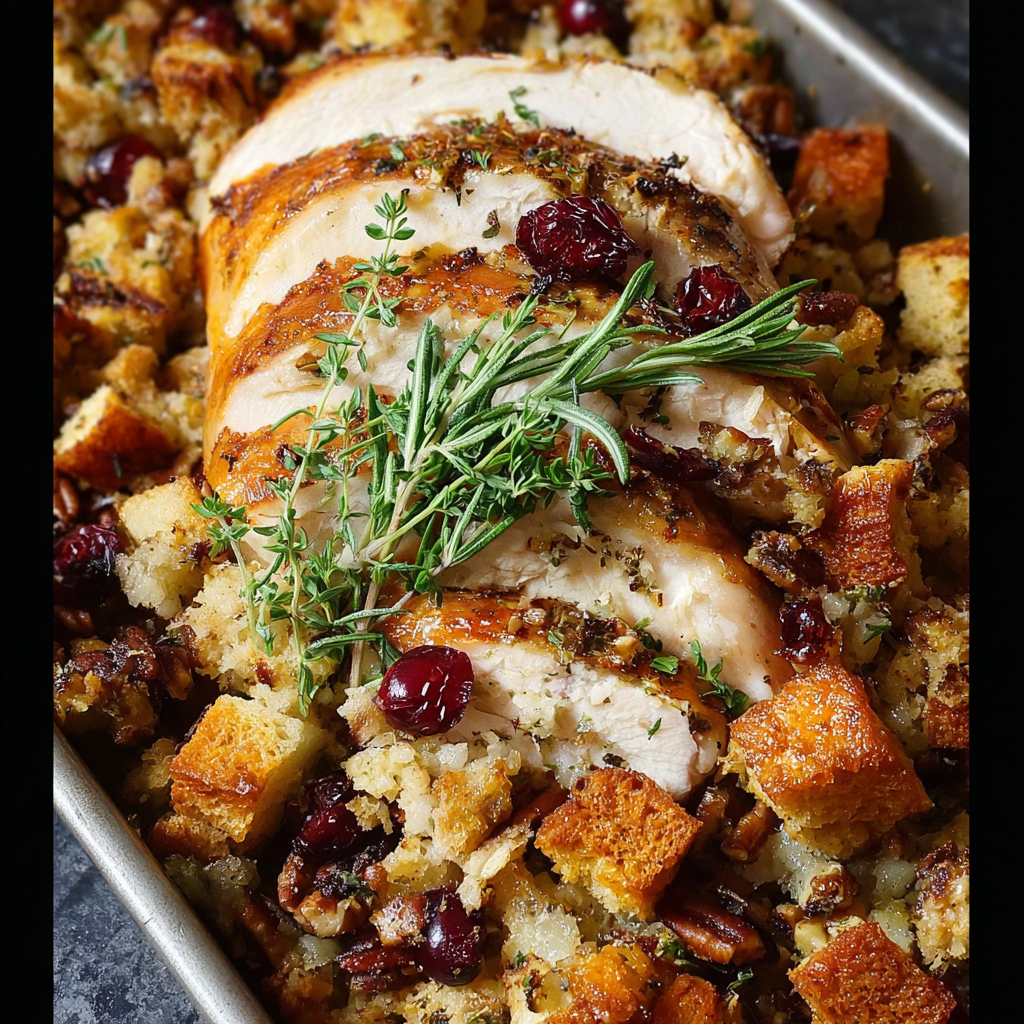
As the holiday season approaches, the aroma of roasting turkey fills the air, signaling gatherings and celebrations. This recipe for Sheet Pan Herb Roasted Turkey with Cranberry Pecan Stuffing combines the comforting flavors of traditional Thanksgiving fare with the convenience of cooking everything on one pan.
By using a blend of herbs and a vibrant stuffing, this dish not only looks impressive but also delivers on taste, allowing you to focus on enjoying time with family and friends. The turkey stays moist while absorbing the herbal notes, and the stuffing’s unique ingredients add a delightful crunch and tartness.
Ingredients
- 1 whole turkey (14-16 lbs)
A whole turkey is the centerpiece of the dish, providing a succulent source of protein. Choosing a good quality bird ensures maximum flavor and moisture. - 1 cup unsalted butter, softened
Butter adds richness and helps to keep the turkey moist during cooking. It also facilitates the melding of herbs and spices, enhancing overall flavor. - 2 tablespoons fresh rosemary, chopped
Rosemary offers an aromatic woodsy flavor that complements the turkey beautifully, infusing it throughout during roasting. - 2 tablespoons fresh thyme, chopped
Thyme provides an earthy note that elevates the turkey's natural flavors while blending nicely with the other herbs. - 2 tablespoons fresh sage, chopped
Sage brings a warm, savory flavor ideal for poultry, enhancing the dish's overall depth and celebrating its seasonal appeal. - Salt and pepper, to taste
Seasoning with salt and pepper is essential for enhancing flavors; they help to balance the richness of the turkey and stuffing. - 1 cup cranberries, fresh or dried
Cranberries lend a tart sweetness that cuts through the richness of the turkey and stuffing, adding a festive touch. - 1 cup pecans, chopped
Pecans provide a crunchy texture and rich, nutty flavor that complements the other ingredients in the stuffing. - 1 loaf of bread, cubed (about 10 cups)
Stale bread serves as the foundation for stuffing, absorbing the flavors of broth and seasonings while providing texture. - 2 cups low-sodium chicken broth
Broth moisten the stuffing, ensuring it cooks evenly while infusing additional flavor to the dish. - 1 onion, diced
Onions contribute sweetness and depth to the stuffing, with their natural sugars caramelizing during cooking. - 2 celery stalks, diced
Celery adds a crisp texture and mild flavor, rounding out the stuffing's complexity. - 2 eggs, beaten
Eggs act as a binder for the stuffing, helping it hold together while enhancing its overall richness.
Directions & Preparation
Step 1: Preheat oven to 325°F (163°C).
Preheating the oven ensures even cooking right from the start. A consistent temperature is critical for roasting turkey, allowing the meat to cook thoroughly while keeping it juicy.
Step 2: Prepare the turkey by removing the giblets and patting dry with paper towels.
Removing giblets helps prevent any unwanted flavors during roasting, while drying the turkey allows the skin to get crispy. This step is crucial for achieving the desired texture and flavor.
Step 3: In a bowl, mix softened butter with chopped herbs, salt, and pepper, then rub it all over the turkey.
Herb-infused butter enhances the flavor of the turkey and encourages a crispy skin. It is vital to ensure even coverage on the turkey for maximum flavor.
Step 4: Place the turkey breast-side up on a large sheet pan.
Positioning the turkey correctly allows for even cooking, helping keep the breast meat moist while providing a beautiful presentation.
Step 5: In a large skillet, melt 1/2 cup of butter over medium heat. Add onions and celery, cooking until softened.
Sautéing onions and celery builds the flavor base for the stuffing. This step ensures the aromatic flavors are fully developed, enhancing the overall taste.
Step 6: Add the bread cubes, cranberries, pecans, and chicken broth to the skillet, stirring to combine.
Mixing everything in this step allows the bread to soak up all the flavors of the broth and aromatics, serving as a moist filling for the turkey.
Step 7: Stir in the beaten eggs to bind the stuffing, then season with salt and pepper to taste.
Eggs create a cohesive stuffing that holds its shape when cooked. This binding process is essential to achieve the desired texture and flavor balance in the dish.
Step 8: Stuff the turkey cavity with the stuffing mixture, packing it loosely.
Loosely packing the stuffing ensures it cooks evenly and allows for expansion during roasting, which is important for a desirable texture.
Step 9: Tuck the wings under and tie the legs with kitchen twine, then place any leftover stuffing around the turkey in the pan.
Tucking the wings prevents them from burning and helps the turkey maintain its shape. Adding leftover stuffing around the turkey enables it to absorb the roasting flavors.
Step 10: Roast the turkey in the preheated oven for 3 to 4 hours, or until a thermometer reads 165°F (74°C) in the thickest part of the thigh.
Using a meat thermometer is crucial for ensuring the turkey is safely cooked without becoming dry. This step prevents undercooking or overcooking.
Step 11: Baste the turkey with drippings every 30 minutes for enhanced flavor and moisture.
Basting helps keep the skin golden and crispy while adding flavor. This hands-on step ensures the turkey remains succulent throughout cooking.
Step 12: Once cooked, remove the turkey from the oven and let it rest for 30 minutes before carving.
Resting allows the juices to redistribute, resulting in a moister turkey. This is a necessary step for serving perfectly juicy slices.
Step 13: Serve the turkey alongside the stuffing, garnishing with additional herbs if desired.
Presentation is key for festive occasions. Garnishing with fresh herbs enhances visual appeal while hinting at the flavors within.

Aromatic Herb Butter: The Key to Flavor
The herb butter used to rub down the turkey is essential for ensuring that each bite is infused with flavor. The blend of rosemary, thyme, and sage not only heightens the turkey's natural taste but also provides a fragrant aroma as it roasts. This technique locks in moisture and creates a crisp, golden skin that is irresistible at the dinner table.
Crunch and Tartness: The Magic of Stuffing
Stuffing is often a highlight of holiday meals, and this recipe brings a delightful twist with cranberries and pecans. The tartness of cranberries cuts through the richness of the turkey, while pecans add a delicious crunch. Together, they create a textural balance that makes each mouthful exciting, proving that stuffing can be just as memorable as the meat itself.
Effortless Cleanup with One-Pan Cooking
Using one sheet pan simplifies the cooking process and minimizes cleanup, making holiday cooking less daunting. By roasting the turkey and stuffing together, you save time in the kitchen, allowing you to enjoy more moments with loved ones. This method not only enhances flavor but also makes for an elegant and hassle-free holiday meal.
FAQs
What should I do if the turkey skin is browning too quickly?
If the skin is browning too fast, cover the turkey loosely with aluminum foil to prevent burning while it continues to cook through.
How can I adjust this recipe for a smaller turkey?
For a smaller turkey, reduce cooking time by about 15 minutes per pound and adjust the stuffing quantities accordingly, but maintain the flavor ratios.
What if the stuffing is too dry?
If the stuffing turns out dry, add a bit more chicken broth gradually, stirring gently until you reach the desired moisture level.
Can I use different nuts in the stuffing?
Yes, you can substitute different nuts like walnuts or almonds; just ensure they are finely chopped to maintain the stuffing's texture.
Why is my turkey breast dry after cooking?
Overcooking can lead to dry turkey breast; using a meat thermometer is crucial to ensure perfect doneness.
What if I prefer a sweeter stuffing?
To achieve a sweeter stuffing, add chopped apples or increase the amount of cranberries to complement the pecans for added sweetness.
Conclusion
This Sheet Pan Herb Roasted Turkey with Cranberry Pecan Stuffing is more than just a meal; it's an experience that brings people together. The careful blend of ingredients and flavors creates a festive dish worthy of any holiday table.
By embracing the simplicity of one-pan cooking, this dish not only saves time but also allows you to focus on what truly matters—sharing good food and good company. Enjoy the festivities, savor every bite, and create memorable moments.
Recipe Card
Herb-Roasted Turkey with Cranberry Pecan Stuffing
Ingredients
- 1 whole turkey 14-16 lbs
- 1 cup unsalted butter softened
- 2 tablespoons fresh rosemary chopped
- 2 tablespoons fresh thyme chopped
- 2 tablespoons fresh sage chopped
- Salt and pepper to taste
- 1 cup cranberries fresh or dried
- 1 cup pecans chopped
- 1 loaf of bread cubed (about 10 cups)
- 2 cups low-sodium chicken broth
- 1 onion diced
- 2 celery stalks diced
- 2 eggs beaten
Instructions
- Preheat oven to 325°F (163°C).
- Prepare the turkey by removing the giblets and patting dry with paper towels.
- In a bowl, mix softened butter with chopped herbs, salt, and pepper, then rub it all over the turkey.
- Place the turkey breast-side up on a large sheet pan.
- In a large skillet, melt 1/2 cup of butter over medium heat. Add onions and celery, cooking until softened.
- Add the bread cubes, cranberries, pecans, and chicken broth to the skillet, stirring to combine.
- Stir in the beaten eggs to bind the stuffing, then season with salt and pepper to taste.
- Stuff the turkey cavity with the stuffing mixture, packing it loosely.
- Tuck the wings under and tie the legs with kitchen twine, then place any leftover stuffing around the turkey in the pan.
- Roast the turkey in the preheated oven for 3 to 4 hours, or until a thermometer reads 165°F (74°C) in the thickest part of the thigh.
- Baste the turkey with drippings every 30 minutes for enhanced flavor and moisture.
- Once cooked, remove the turkey from the oven and let it rest for 30 minutes before carving.
- Serve the turkey alongside the stuffing, garnishing with additional herbs if desired.
Notes
Additional serving suggestions: pair with a crisp salad, garlic bread, or roasted seasonal vegetables for balance.
For make-ahead, prep components separately and assemble just before heating to preserve texture.
Taste and adjust with acid (lemon/vinegar) and salt right at the end to wake up flavors.