Introduction
Ratatouille soup encapsulates the vibrant essence of classic French cuisine, transforming traditional ratatouille into a comforting, warm bowl perfect for any season. This dish not only showcases a medley of colorful vegetables but also offers an opportunity to enjoy the rich flavors of the Mediterranean in an accessible format.
The beauty of ratatouille soup lies in its versatility; whether served as an appetizer or main course, it can be adapted to suit various tastes and dietary preferences. It's an excellent way to utilize summer vegetables when they're at their peak, yet it also warms the heart during colder months, encouraging home cooks to embrace the bounty of the harvest.
In this article, we will explore the nourishing ingredients, the thoughtful preparation steps, and some creative variations to elevate your ratatouille soup experience.
Ingredients
- 2 medium eggplants, diced
Eggplants provide a creamy texture and absorb flavors, giving depth to the soup. Their slightly bitter taste mellows as they cook, making them a vital addition to any ratatouille-inspired dish. - 2 medium zucchinis, diced
Zucchini adds a tender texture and light sweetness, complementing the heartiness of other vegetables. They cook quickly and blend beautifully into the soup, enhancing the overall mouthfeel. - 1 large red bell pepper, diced
Red bell peppers bring a sweet, slightly tangy flavor along with a vibrant color. They also contribute nutrients, including vitamins A and C, adding to the soup's overall health benefits. - 1 large yellow onion, chopped
Onions are essential for building a flavor base. As they cook, they become sweet and fragrant, enhancing the aromatic profile of the soup. - 3 cloves of garlic, minced
Garlic delivers a punch of flavor and has numerous health benefits. Its aromatic quality elevates the dish, allowing it to captivate the palate. - 4 cups vegetable broth
Broth acts as the soup's liquid foundation, forming a base that ties all the flavors together. It adds richness and depth, making the soup comforting and hearty. - 1 can (14 ounces) diced tomatoes, with juices
Canned tomatoes provide acidity and a lovely umami flavor, which balances sweet and earthy notes from the vegetables. They also contribute vibrant color to the dish. - 1 tablespoon tomato paste
Tomato paste intensifies the tomato flavor, resulting in a richer soup. It also thickens the mixture, allowing for a more satisfying texture. - 1 teaspoon dried thyme
Thyme offers an earthy flavor that complements the vegetables beautifully. Its aromatic properties and subtle sweetness enhance the soup's overall aroma. - 1 teaspoon dried oregano
Oregano is another herb that adds depth and complexity to dishes, especially those with tomato. Its slightly peppery essence uplifts the flavor profile. - Salt and pepper to taste
Seasoning is crucial; salt enhances all the flavors, while pepper adds a hint of heat, rounding off the taste of the soup. - 2 tablespoons olive oil
Olive oil not only brings healthy fats but also elevates flavor through its fruity notes. It is perfect for sautéing the veggies, allowing them to achieve a beautiful caramelization.
Directions & Preparation
Step 1: Heat the olive oil in a large pot over medium heat.
Heating the olive oil creates a suitable environment for sautéing the vegetables, unlocking their flavors. A medium heat allows the oil to warm without burning, ensuring a proper caramelization of the ingredients.
Step 2: Add the onion and garlic, sautéing until softened.
Sautéing the onion and garlic will build the flavor base for the soup. As the onion becomes translucent, it releases its sweetness, while the garlic infuses the oil with aromatic flavor, setting the stage for the rest of the vegetables.
Step 3: Stir in the diced eggplant and bell pepper, cooking for about 5 minutes.
Adding the eggplant and bell pepper next allows them to begin softening before introducing the other vegetables. This step ensures that every ingredient is well-cooked and allows the bell pepper's sweetness to mingle with the savory onion and garlic.
Step 4: Incorporate the zucchini, stirring to combine.
By adding zucchini at this stage, you ensure that it doesn't overcook and turn mushy. It should maintain a bit of its crispness, providing a pleasant texture contrast in the soup.
Step 5: Pour in the vegetable broth, diced tomatoes, and tomato paste, stirring well.
This step is crucial as it creates the soup’s liquid base. Mixing in the tomato paste enriches the broth, while the diced tomatoes contribute acidity that brightens the overall flavor.
Step 6: Add thyme, oregano, salt, and pepper, then bring to a boil.
Spicing the soup enhances its flavor, while bringing it to a boil ensures that all ingredients meld together. This bubbling stage develops the layers of flavor, leading to a well-rounded final dish.
Step 7: Reduce heat to low and let it simmer for 30 minutes, stirring occasionally.
Simmering allows the flavors to deepen and the vegetables to soften to perfection without turning into mush. This gentle cooking method also keeps the soup vibrant and gives time for every ingredient to shine.
Step 8: Taste and adjust seasonings before serving hot.
Tasting the soup is a critical step in ensuring your final dish is well-seasoned and balanced. This final adjustment allows you to refine flavors according to your preference before enjoying the comforting bowl.

Elevating Flavor with Fresh Herbs
Adding a sprinkle of fresh herbs like basil or parsley just before serving complements the dish beautifully, providing fresh notes that contrast nicely with the richness of the vegetables. Fresh herbs can transform your ratatouille soup, enhancing the overall fragrance and presentation.
Creative Variations for Unique Tastiness
Consider adding a splash of balsamic vinegar or a dollop of pesto for an unexpected twist in flavor. Each variation not only deepens the complexity of the soup but also allows home cooks to tailor the dish to their palate, making it both interesting and personal.
Serving Suggestions to Enhance the Experience
Pairing ratatouille soup with a crusty baguette or a side salad can create a well-rounded meal that excites the palate. This soup may be enjoyed either as a comforting main dish or an appetizer, allowing for versatile dining options that suit any occasion.
FAQs
What can I do if my ratatouille soup is too thick?
If your soup is too thick, simply add more vegetable broth or water to reach your desired consistency. Stir it in gradually until you achieve the texture you prefer.
How can I make the soup spicier?
To introduce spice, consider adding a pinch of red pepper flakes or a dash of hot sauce during cooking. Adjust to your taste preference to find the perfect level of heat.
Can I use fresh tomatoes instead of canned?
Absolutely! Fresh tomatoes can be used, though you may need to peel and dice them first. Just be sure to adjust the cooking time for freshness.
What if I want to scale the recipe for a larger group?
To scale the recipe, simply multiply each ingredient by the number of servings desired, ensuring a balanced flavor throughout. Adjust cooking time accordingly for larger batches.
Can I add protein to make this more filling?
Certainly! Adding cooked lentils, chickpeas, or shredded chicken can increase protein content and make the soup heartier, catering to more substantial meal needs.
What if my soup tastes bland even after seasoning?
If your soup lacks flavor, consider adding a bit more acidity with lemon juice or vinegar, and ensure adequate seasoning adjusts to maximize the flavors of the vegetables.
Conclusion
Ratatouille soup is not only a tribute to the comfort of home cooking but also a canvas for creativity. By varying the ingredients or adding your favorite herbs and spices, you can make it uniquely yours.
This dish is a wonderful opportunity to embrace seasonal produce while enjoying a nourishing, wholesome meal that brings people together. Dive into a bowl and share in the warmth and flavor it brings!
Recipe Card
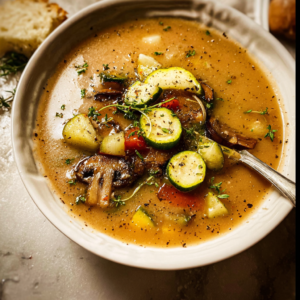
A Heartwarming Bowl of Ratatouille Soup
Ingredients
- 2 medium eggplants diced
- 2 medium zucchinis diced
- 1 large red bell pepper diced
- 1 large yellow onion chopped
- 3 cloves of garlic minced
- 4 cups vegetable broth
- 1 can 14 ounces diced tomatoes, with juices
- 1 tablespoon tomato paste
- 1 teaspoon dried thyme
- 1 teaspoon dried oregano
- Salt and pepper to taste
- 2 tablespoons olive oil
Instructions
- Heat the olive oil in a large pot over medium heat.
- Add the onion and garlic, sautéing until softened.
- Stir in the diced eggplant and bell pepper, cooking for about 5 minutes.
- Incorporate the zucchini, stirring to combine.
- Pour in the vegetable broth, diced tomatoes, and tomato paste, stirring well.
- Add thyme, oregano, salt, and pepper, then bring to a boil.
- Reduce heat to low and let it simmer for 30 minutes, stirring occasionally.
- Taste and adjust seasonings before serving hot.
Notes
Additional serving suggestions: pair with a crisp salad, garlic bread, or roasted seasonal vegetables for balance.
For make-ahead, prep components separately and assemble just before heating to preserve texture.
Taste and adjust with acid (lemon/vinegar) and salt right at the end to wake up flavors.