Introduction
Thanksgiving is a time for coming together, sharing stories, and enjoying food that evokes cherished memories. Among the most beloved dishes that grace the holiday table is stuffing, and this recipe is a heartfelt tribute to the comforting flavors that grandma conjured up every year.
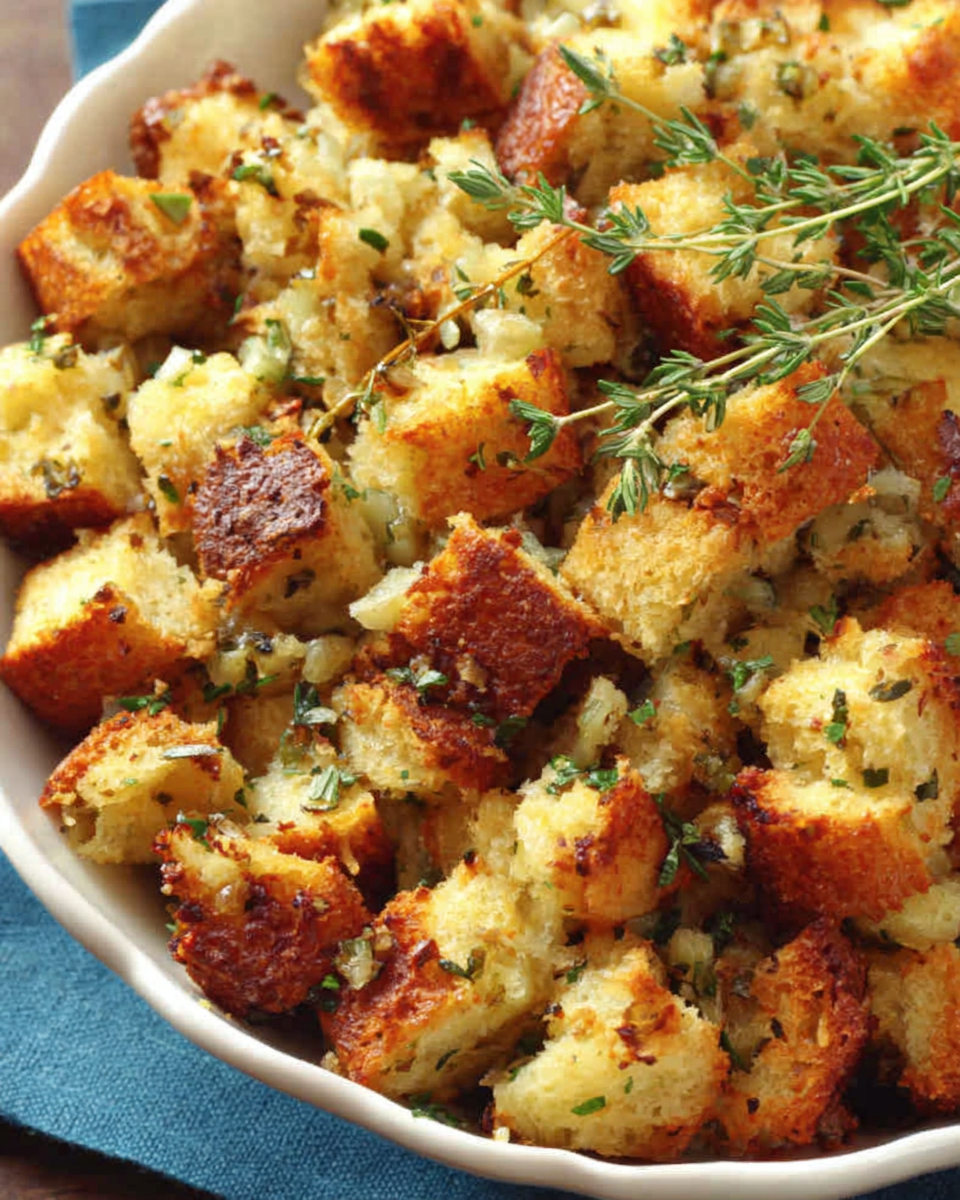
Grandma's classic Thanksgiving stuffing has stood the test of time. It's not just about filling the turkey; it's about bringing family together with rich flavors and satisfying textures. The aromatic blend of herbs, vegetables, and bread creates a warm, inviting dish that feels like a hug on a plate.
Ingredients
- 1 loaf of day-old bread, cubed (about 10 cups)
Day-old bread is essential for creating a sturdy base for your stuffing. It absorbs moisture from the broth and other ingredients without becoming overly mushy, ensuring a delightful contrast between crunchy and soft textures. - 1 cup unsalted butter
Butter adds rich flavor and moisture to the stuffing. It also helps sauté the vegetables, providing a savory foundation while allowing the natural flavors to shine through. - 2 cups onions, chopped
Onions bring a sweet and savory flavor that forms the backbone of the stuffing. When sautéed, they become caramelized and add depth, making each bite irresistible. - 1 cup celery, chopped
Celery contributes a pleasant crunch and earthy flavor to the stuffing. It also adds a fresh element that balances out the richness of the butter and spices. - 2 cups chicken or vegetable broth (low-sodium)
Broth ensures the stuffing has sufficient moisture to meld the ingredients together. Using low-sodium broth allows for flavor control, ensuring your dish isn’t too salty. - 1 tablespoon fresh sage, chopped (or 1 teaspoon dried)
Sage is a quintessential herb for stuffing, imparting a warm, earthy note that complements the other ingredients beautifully. Fresh sage provides a more vibrant flavor, while dried offers convenience. - 1 tablespoon fresh thyme, chopped (or 1 teaspoon dried)
Thyme adds a subtle herbal flavor that enhances the overall seasoning. Its aromatic qualities work harmoniously with sage for a well-balanced dish. - 1 teaspoon salt
Salt enhances the natural flavors of the ingredients, bringing out their best qualities. It’s important to adjust to taste, especially when using broth that may already contain sodium. - 1/2 teaspoon black pepper
Black pepper adds a slight kick that rounds out the flavor profile. It provides a contrast to the sweetness of the vegetables and richness of the butter. - 2 large eggs, beaten
Eggs serve as a binding agent, helping to hold the stuffing together as it cooks. This provides a firm texture and aids in creating a cohesive dish.
Directions & Preparation
Step 1: Preheat your oven to 350°F (175°C).
Preheating the oven is crucial for even cooking. An adequately heated oven ensures the stuffing bakes thoroughly, allowing the top to develop a perfectly golden crust while the inside remains moist.
Step 2: In a large skillet, melt the butter over medium heat. Add the chopped onions and celery, and sauté until they are soft and translucent, about 5-7 minutes.
Sautéing the onions and celery in butter releases their natural sweetness and flavors. This step is vital, as it builds a flavorful base for the stuffing and enriches the aromas that will permeate your kitchen.
Step 3: Stir in the chopped sage, thyme, salt, and pepper. Cook for another minute to release the herbs' fragrances.
Cooking the herbs briefly allows their oils to infuse into the sautéed vegetables, enhancing the overall flavor profile of the stuffing. This step ensures the seasonings are well integrated before mixing with the bread.
Step 4: In a large bowl, combine the bread cubes and the sautéed vegetable mixture. Stir gently to combine.
This step introduces all elements into the stuffing, ensuring that the bread cubes soak up the aromatic vegetable mix. Gentle stirring helps maintain the bread’s structure while promoting even distribution of flavors.
Step 5: Pour the chicken or vegetable broth over the mixture gradually, adding just enough to moisten the bread without making it soggy. You may not need all the broth.
Adding broth gradually allows you to gauge the moisture level of the stuffing. It’s important to ensure the bread is adequately moist for even cooking while preventing a soggy texture.
Step 6: Add the beaten eggs to the mixture and stir until evenly combined.
Incorporating eggs serves to bind the ingredients together, yielding a cohesive stuffing that holds its shape during baking. This step is crucial for achieving that perfect texture.
Step 7: Transfer the stuffing to a greased baking dish. Spread it evenly and cover with aluminum foil.
Transferring the stuffing to a greased dish prevents sticking and allows for easy removal later. Covering with foil traps steam, helping the stuffing cook through evenly before developing a crust.
Step 8: Bake for 25 minutes, then remove the foil and bake for an additional 15-20 minutes, or until the top is golden brown.
Baking with foil initially retains moisture, which is essential for cooking the stuffing through. Removing it allows the top to crisp up, providing a delightful contrast to the tender base.
Step 9: Remove from the oven and let it rest for 10 minutes before serving.
Letting the stuffing rest after baking allows the flavors to meld and the texture to set. This short pause enhances the eating experience, making each bite a harmony of flavors.

Timeless Ingredients That Make a Difference
The beauty of grandma's stuffing lies in its simplicity and the quality of its ingredients. Fresh herbs elevate the dish, while day-old bread ensures the right texture. Each element contributes essential flavors, making every bite a celebration of tradition and care.
Balancing Flavors for the Perfect Mix
Finding the right balance of savory, herbal, and sweet elements is key to a successful stuffing. The interplay between sautéed vegetables and robust broth creates depth, while herbs like sage and thyme infuse warmth and fragrance, reminiscent of treasured family gatherings.
Tips for Perfecting Your Thanksgiving Stuffing
To elevate your stuffing, consider adding additional ingredients like cooked sausage, dried cranberries, or even chopped apples for a touch of sweetness. Experimenting with different breads can also bring unique flavors and textures, allowing you to craft a dish that pays homage to your family traditions.
FAQs
My stuffing turned out too dry, what can I do?
If your stuffing turns out dry, try adding more broth gradually while reheating, ensuring it absorbs moisture without becoming mushy.
Can I use fresh bread instead of day-old?
Fresh bread can work, but it may result in overly soggy stuffing. If using fresh, consider lightly toasting or drying it out first.
What should I do if my stuffing is too bland?
If your stuffing lacks flavor, try mixing in additional herbs, seasoning, or even a dash of hot sauce to enhance its overall taste.
Can I add meat to the stuffing?
Absolutely! Cooked sausage, diced chicken, or even pancetta can add great flavor and make the stuffing heartier.
Is it important to let the stuffing rest before serving?
Yes, resting allows the stuffing to firm up, making it easier to serve and enhancing the melding of flavors.
What if my stuffing is too thick?
To adjust thick stuffing, add a bit of warm broth and stir gently until you reach your desired consistency.
Conclusion
Grandma’s classic Thanksgiving stuffing is more than just a side dish; it's a tradition steeped in love and family. Each bite transports you back to cherished gatherings, filled with warmth and laughter.
As you prepare this stuffing recipe, remember that the love and care you put into it will shine through. It's a heartfelt reminder of home, making your Thanksgiving celebrations even more memorable.
Recipe Card
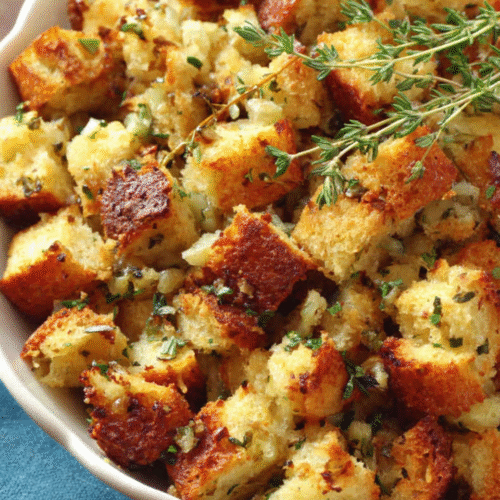
Delightful Thanksgiving Stuffing from Grandma's Kitchen
Ingredients
- 1 loaf of day-old bread cubed (about 10 cups)
- 1 cup unsalted butter
- 2 cups onions chopped
- 1 cup celery chopped
- 2 cups chicken or vegetable broth low-sodium
- 1 tablespoon fresh sage chopped (or 1 teaspoon dried)
- 1 tablespoon fresh thyme chopped (or 1 teaspoon dried)
- 1 teaspoon salt
- 1/2 teaspoon black pepper
- 2 large eggs beaten
Instructions
- Preheat your oven to 350°F (175°C).
- In a large skillet, melt the butter over medium heat. Add the chopped onions and celery, and sauté until they are soft and translucent, about 5-7 minutes.
- Stir in the chopped sage, thyme, salt, and pepper. Cook for another minute to release the herbs' fragrances.
- In a large bowl, combine the bread cubes and the sautéed vegetable mixture. Stir gently to combine.
- Pour the chicken or vegetable broth over the mixture gradually, adding just enough to moisten the bread without making it soggy. You may not need all the broth.
- Add the beaten eggs to the mixture and stir until evenly combined.
- Transfer the stuffing to a greased baking dish. Spread it evenly and cover with aluminum foil.
- Bake for 25 minutes, then remove the foil and bake for an additional 15-20 minutes, or until the top is golden brown.
- Remove from the oven and let it rest for 10 minutes before serving.
Notes
Additional serving suggestions: pair with a crisp salad, garlic bread, or roasted seasonal vegetables for balance.
For make-ahead, prep components separately and assemble just before heating to preserve texture.
Taste and adjust with acid (lemon/vinegar) and salt right at the end to wake up flavors.