Introduction
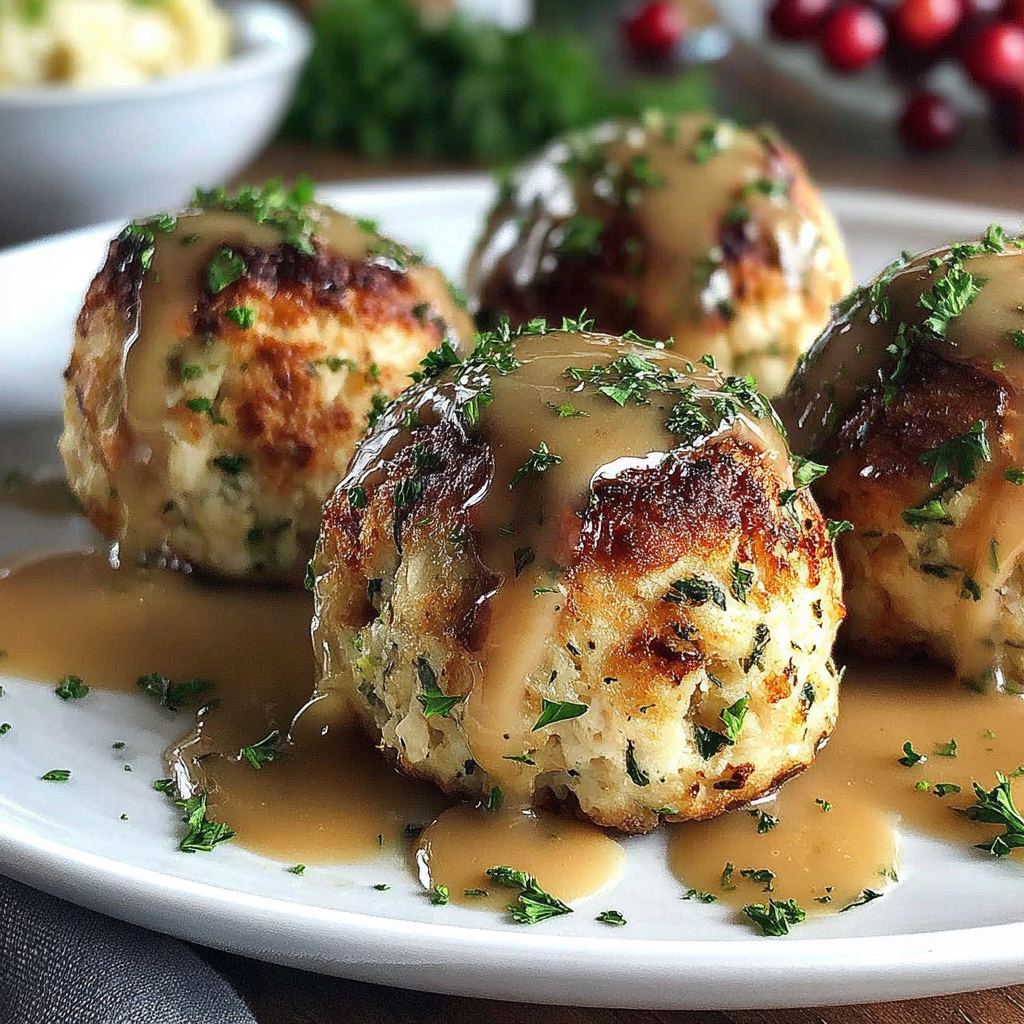
Turkey stuffing balls bring the joy of traditional stuffing to a convenient, bite-sized form. Perfect for holiday gatherings or cozy family dinners, these flavor-packed morsels are sure to impress your guests and satisfy even the pickiest eaters. With a blend of classic ingredients, they encapsulate the essence of Thanksgiving in each ball.
The versatility of turkey stuffing balls is remarkable; they can be served as an appetizer, side dish, or even a main attraction. Their crispy exterior and soft, savory interior make them a delightful addition to any meal. Embrace this recipe to create a comforting dish that not only fills the belly but also warms the heart.
Ingredients
- 1 pound ground turkey
Ground turkey serves as a lean source of protein that binds the stuffing together, providing a moist, flavorful base. It adds a subtle flavor that enhances the overall taste without overpowering other ingredients. - 4 cups stale bread cubes
Stale bread cubes are essential for texture, absorbing moisture and flavors while keeping the stuffing balls light. White or whole wheat cubed bread can be used based on preference, with the starch acting as a binding agent. - 1 cup chicken broth
Chicken broth adds depth of flavor and moisture, preventing the stuffing from becoming too dry. It enhances the overall savory profile and ensures each bite is rich and satisfying. - 1/2 cup onion, finely chopped
Onions bring a slight sweetness and savory note, adding complexity to the flavor. Caramelizing them before mixing in will deepen their flavor, creating a caramel-rich essence within the stuffing balls. - 1/2 cup celery, finely chopped
Celery introduces a fresh crunch that contrasts beautifully with the softer bread and turkey. Its high water content also contributes moisture to the mixture, making the stuffing delectable. - 2 cloves garlic, minced
Garlic infuses the stuffing with aromatic warmth, enhancing the overall flavor profile. It complements the other ingredients and adds a layer of savory richness that is hard to resist. - 2 teaspoons dried sage
Dried sage offers a classic flavor synonymous with Thanksgiving stuffing. Its slightly peppery and earthy notes uplift the dish, making it distinctly seasonal. - 1 teaspoon dried thyme
Thyme provides a subtle earthiness that balances the flavors. Its aromatic qualities make it an excellent herb choice, pairing well with turkey and enhancing the dish’s overall profile. - 1/2 teaspoon black pepper
Black pepper adds a hint of warmth and spiciness. While it may seem simple, it plays a vital role in elevating the flavor without being overpowering. - 1 large egg
The egg acts as a binder, ensuring that the stuffing balls hold their shape during cooking. It adds richness and moisture, contributing to a satisfying texture. - 1/2 cup grated Parmesan cheese
Parmesan cheese introduces a salty, nutty flavor while enriching the stuffing balls. It also aids in achieving a golden-brown crust when baked.
Directions & Preparation
Step 1: Preheat the oven to 400°F (200°C).
Preheating the oven ensures that the stuffing balls bake evenly and develop a crispy exterior. An adequately heated oven will help achieve that perfect golden-brown color and texture you desire in the final product.
Step 2: In a large skillet, heat a tablespoon of oil over medium heat. Add the chopped onions and celery, cooking until softened.
Cooking the onions and celery first allows their flavors to meld beautifully, releasing their natural sweetness. This step sets the foundation for a flavor-packed stuffing mixture, so don’t rush it; allow them to become tender but not browned.
Step 3: Add the minced garlic and cook for an additional minute until fragrant.
Garlic cooks quickly and can become bitter if overcooked. Sautéing it until fragrant enhances the stuffing mixture's overall depth of flavor, ensuring a robust taste in every bite without overwhelming the other ingredients.
Step 4: In a large mixing bowl, combine the ground turkey, bread cubes, cooked onion mixture, chicken broth, herbs, egg, and cheese.
Combining the ingredients in a large bowl allows for even mixing. This step is critical as it ensures that every turkey stuffing ball is uniform in flavor. Mixing by hand can help you feel the texture and adjust ingredients accordingly.
Step 5: Mix until just combined; avoid overworking the mixture.
Overmixing can lead to dense stuffing balls. Gently folding the ingredients ensures that they combine well while retaining a light texture, crucial for the end result.
Step 6: Form the mixture into balls, about 2 inches in diameter, and place on a baking sheet lined with parchment paper.
Shaping the mixture into balls ensures uniform cooking and an appealing presentation. Using parchment paper aids in even cooking and prevents sticking, making cleanup a breeze.
Step 7: Bake for 25-30 minutes or until golden brown and cooked through.
Baking allows the flavors to meld and the texture to firm up. Keep an eye on the color; when they turn a luscious golden brown, they are ready. Using a meat thermometer ensures they reach the safe internal temperature of 165°F (74°C).
Step 8: Let the turkey stuffing balls rest for a few minutes before serving.
Allowing the stuffing balls to rest helps them firm up, making them easier to serve and eat. Additionally, resting allows for flavors to settle and intensify, enhancing the overall eating experience.

Flavor Variations to Try
Experimenting with different herbs and spices can elevate your turkey stuffing balls to new heights. Consider adding cranberries for a hint of sweetness, or swapping in fresh herbs like parsley or rosemary for a fresh twist. You can also incorporate nuts, such as walnuts or pecans, for added crunch and richness, making them uniquely yours.
Serving Suggestions for Every Occasion
Turkey stuffing balls can shine on any table, not just during Thanksgiving. Serve them with a side of cranberry sauce for a sweet and tangy contrast, or alongside a creamy gravy for added moisture. They also make great stand-alone appetizers during festive gatherings, where they can be seasoned differently to suit a variety of palates.
Pairing Beverages with Turkey Stuffing Balls
When it comes to pairing beverages with turkey stuffing balls, consider options that complement the savory flavors. A crisp white wine, such as Sauvignon Blanc, cuts through richness, while a fuller-bodied red, like Cabernet Sauvignon, enhances the hearty elements. For a non-alcoholic option, a sparkling apple cider or herbal iced tea can provide a delightful balance.
FAQs
What should I do if my stuffing balls are too dry?
If your stuffing balls are dry, consider adding a bit more chicken broth or olive oil to the mixture before baking, or serve them with gravy for extra moisture.
How can I adjust this recipe for a larger gathering?
To scale the recipe, simply multiply the ingredients proportionally. Ensure you have enough baking sheets and space in your oven, adjusting cooking times slightly for larger batches as needed.
What if the mixture feels too wet to form into balls?
If the mixture is overly wet, try adding more stale bread cubes gradually until it achieves a shape that can hold. Letting it rest may also help absorb some moisture.
Can I use different types of bread for this recipe?
Absolutely! Using different breads, such as sourdough or rye, can provide unique flavors and textures. Just ensure they are stale for the best results.
How can I make these turkey stuffing balls spicier?
To add spice, you can incorporate red pepper flakes, chili powder, or even some diced jalapeños into the mixture. Adjust the amount to suit your heat preference.
Why did my stuffing balls come out mushy?
Mushy stuffing balls could result from too much moisture in the mixture. Be sure to balance wet and dry ingredients, allowing enough bread cubes to absorb moisture.
Conclusion
Turkey stuffing balls offer a satisfying blend of flavors and textures that are sure to be a hit at any gathering. Their adaptability means you can personalize them to reflect your tastes, making each batch truly special. Whether you're preparing for a holiday feast or a weeknight meal, they are a delightful addition to the dining table.
With their savory goodness and crispy texture, these stuffing balls highlight traditional flavors in an exciting format. Get creative with variations and pairings, and watch them disappear from plates in no time!
Recipe Card

Savory Turkey Stuffing Balls for Holiday Feasts
Ingredients
- 1 pound ground turkey
- 4 cups stale bread cubes
- 1 cup chicken broth
- 1/2 cup onion finely chopped
- 1/2 cup celery finely chopped
- 2 cloves garlic minced
- 2 teaspoons dried sage
- 1 teaspoon dried thyme
- 1/2 teaspoon black pepper
- 1 large egg
- 1/2 cup grated Parmesan cheese
Instructions
- Preheat the oven to 400°F (200°C).
- In a large skillet, heat a tablespoon of oil over medium heat. Add the chopped onions and celery, cooking until softened.
- Add the minced garlic and cook for an additional minute until fragrant.
- In a large mixing bowl, combine the ground turkey, bread cubes, cooked onion mixture, chicken broth, herbs, egg, and cheese.
- Mix until just combined; avoid overworking the mixture.
- Form the mixture into balls, about 2 inches in diameter, and place on a baking sheet lined with parchment paper.
- Bake for 25-30 minutes or until golden brown and cooked through.
- Let the turkey stuffing balls rest for a few minutes before serving.
Notes
Additional serving suggestions: pair with a crisp salad, garlic bread, or roasted seasonal vegetables for balance.
For make-ahead, prep components separately and assemble just before heating to preserve texture.
Taste and adjust with acid (lemon/vinegar) and salt right at the end to wake up flavors.